 blog
blog
Visiting vs Live-In Care: A 2026 Comparison
Table of Contents
- Visiting vs Live-In Care: Key Differences at a Glance
- What Is Visiting Care and Who Is It Best For?
- What Is Live-In Care and When Is It the Right Choice?
- The Cost of Live-In Care Per Week and Visiting Care Fees
- How to Fund Home Care: Options for Families
- The Care Needs Assessment Process Explained
- Frequently Asked Questions
Last Updated: September 14, 2026
Visiting vs Live-In Care: Key Differences at a Glance
Choosing between visiting and live-in care comes down to one question: how much support does the person actually need, and for how many hours a day? A visiting vs live in care comparison matters because the two models solve different problems. Visiting care delivers scheduled calls through the day; live-in care places a carer in the home around the clock.
This guide from Bright Sky Care Ltd breaks down who each option suits, what drives the cost of live-in care per week, how to fund home care, and what the care needs assessment process involves. Get the model right and everything else, from rota to budget, falls into place.
| Feature | Visiting Care | Live-In Care |
|---|---|---|
| Hours covered | Scheduled visits, typically 30-60 minutes | Up to 24 hours, with breaks |
| Best for | Low to moderate, predictable needs | Round-the-clock or unpredictable needs |
| Overnight support | Usually not included | Included as standard |
| Cost pattern | Priced per visit or per hour | Priced per week |
| Home adaptations | Rarely needed | Carer needs a bedroom and facilities |
What Is Visiting Care and Who Is It Best For?
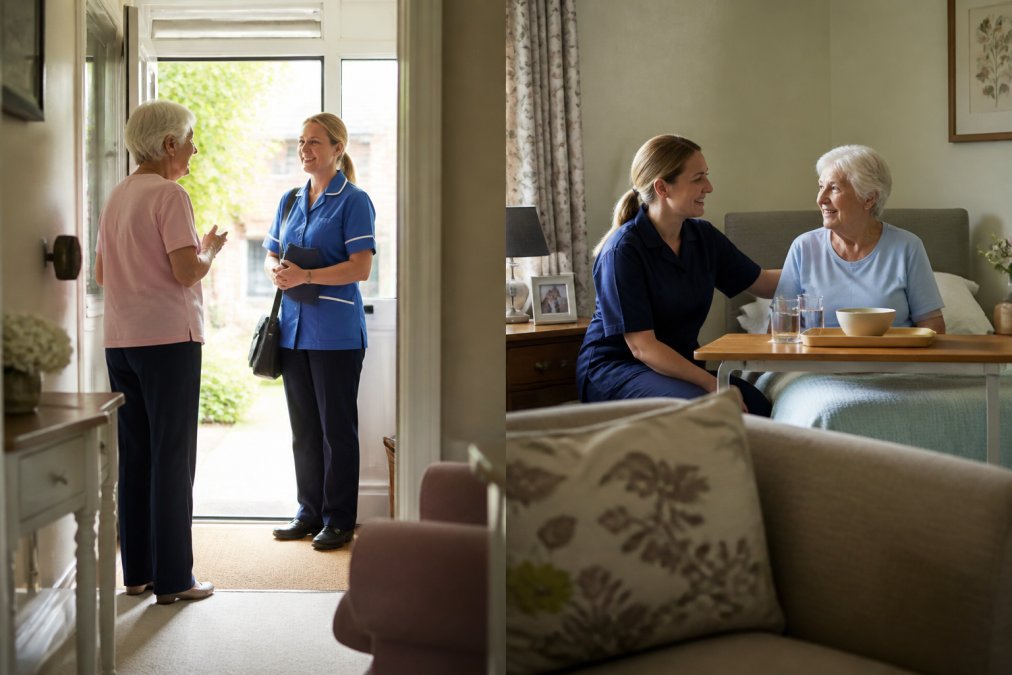
Visiting care is a service where a trained carer comes to the person's home at agreed times to help with personal care, medication prompts, meals and companionship, then leaves. It suits people who are largely independent but need a reliable hand at set points in the day.

Typical Visiting Care Schedules
Most packages run as one to four calls a day, from a 30-minute morning visit to a longer teatime slot. A common pattern is a morning call for washing and dressing, a lunch call for a hot meal, and an evening call for settling and medication. Some families add a separate night call; many do not need one.
Pros and Cons of Visiting Care
The strengths are flexibility and familiarity: the person stays in their own home, the family can scale hours up or down, and costs track the support actually used.
The limitation is the gaps. Between calls, nobody is there. If the person's needs become unpredictable, or they start to wander or fall, scheduled visits stop being enough. That is the point at which families usually start looking at live-in care.
What Is Live-In Care and When Is It the Right Choice?
Live-in care is a service where a carer lives in the person's home and provides continuous support, with agreed rest breaks covered by a second carer or a rota. It is the right choice when someone needs help at unpredictable times, overnight supervision, or specialist support for a condition such as dementia.
Pros and Cons of Live-In Care
The main advantage is continuity. Meals, medication, personal care and companionship happen on the person's own schedule, and there is someone present overnight. For couples, one live-in carer can often support both people.
The trade-offs are real. It costs more than a light visiting package. The home needs a suitable bedroom and bathroom for the carer. And it depends on the right match: a carer who does not gel with the person will not last, which is why a proper introduction matters. Bright Sky Care Ltd builds care plans around family needs and matches carers to clients before the arrangement starts.
The Cost of Live-In Care Per Week and Visiting Care Fees
The cost of live-in care per week depends on the level of need, the number of carers required for cover, the region, and whether specialist dementia support is involved. Visiting care is usually quoted per visit or per hour, so the weekly figure rises with the number of calls. Because every package is built around an individual assessment, the honest answer is that pricing depends on the care plan.
A few habits keep the quote accurate:
- Ask for a written breakdown of hours, rates and any overnight or weekend supplements.
- Confirm what happens to the price if needs increase mid-contract.
- Check whether travel time or mileage is charged separately.
- Ask which costs are fixed and which are reviewed.
How to Fund Home Care: Options for Families
Funding usually comes from a mix of sources, and the right combination depends on the person's savings, income and health needs. Many families start with local authority support, then top up privately. Others are self-funding from the outset.
The main routes to explore:
- Local authority funding. Your council carries out a financial assessment to decide whether it will contribute. The thresholds and rules are set nationally but administered locally, so check your council's current figures rather than relying on last year's numbers.
- NHS continuing healthcare. For people with a primary health need, the NHS may fund care in full. Eligibility is decided through a formal assessment. See NHS continuing healthcare guidance for how the process works.
- Attendance Allowance. A benefit for people over State Pension age who need help with personal care (Attendance Allowance: Eligibility). Rates change annually, so confirm the current amount on the GOV.UK Attendance Allowance page.
- Self-funding. Savings, pensions, and in some cases releasing equity from the home. An independent financial adviser who specialises in later-life care can model this properly.
- Direct payments. If the council agrees a care budget, some families take it as a direct payment and arrange their own care.
The Care Needs Assessment Process Explained
The care needs assessment process is a free evaluation carried out by the local authority to establish what support someone requires and whether they qualify for public funding. It is the starting point for almost every funding route, and it is separate from the financial assessment that decides who pays.
Here is how it typically runs:
- Referral. You contact the council's adult social care team, or a hospital discharge team makes the referral.
- Assessment visit. A social care professional visits the person at home and talks through daily living, mobility, memory, and safety.
- Care plan. The assessor drafts a plan setting out the agreed needs and the support to meet them.
- Financial assessment. A separate team reviews income and savings to decide the funding split.
- Review. Plans are reviewed periodically, or sooner if circumstances change.
If you want to move faster, a private assessment removes the wait. Bright Sky Care Ltd offers a free, no-obligation care assessment, so families can get a clear picture of the right model before committing.
The hardest part of this decision is rarely the care itself; it is admitting that the pattern of need has changed. If overnight help, memory support or unpredictable days have become the norm, a visiting rota will keep leaving gaps.
Bright Sky Care Ltd provides visiting, live-in and specialist dementia care, with care plans built around each family and a free, no-obligation assessment to start. Our team matches carers to clients before care begins, and we hold a 9.8 review score on homecare.co.uk. Get started with Bright Sky Care Ltd and find the model that keeps your parent safely at home.
Frequently Asked Questions
What is the main difference between visiting care and live-in care?
Visiting care provides scheduled calls throughout the day or week, typically lasting from 30 minutes to a few hours. It suits people who need help with specific tasks like personal care, medication prompts, or meal preparation. Live-in care places a carer in the home around the clock, offering continuous support and companionship. This option is better for those who need regular supervision, help during the night, or specialist dementia support to remain safely at home.
How do the costs of visiting care compare to live-in care?
The cost of live-in care per week is usually a single, all-inclusive fee that covers the carer's time and accommodation. Visiting care is charged by the hour, so the total depends on how many calls you need. For a few hours a week, visiting care is often less expensive. Once you need multiple daily visits, live-in care can become more cost-effective. For exact pricing, contact Bright Sky Care Ltd for a quote.
How does the care needs assessment process work?
A care needs assessment is a free evaluation carried out by a trained professional. It involves discussing your medical history, daily routine, and the specific tasks you need help with. The assessor will also consider your safety at home and your personal preferences. This process helps determine whether visiting or live-in care is more suitable. Bright Sky Care Ltd offers a free, no-obligation assessment to create a personalised care plan.
Is live-in care a cost-effective alternative to a care home?
Live-in care can be a comparable or more cost-effective option than a residential care home, especially for couples who wish to stay together. It allows the person to remain in their own home, which many find preferable to moving into a facility. The overall cost depends on the level of care required. To understand how to fund home care, including local authority support and other financial options, speak with a care adviser.