 how-to
Book a Home Care Assessment: Step-by-Step Guide
Table of Contents
- Why a Professional Home Care Assessment Matters
- Questions to Ask Home Care Providers Before Booking
- Preparing for Your Home Care Assessment: A Checklist
- What Happens During a Professional Home Care Assessment
- Understanding What a Personalised Care Plan Is
- How to Book Your Assessment with Bright Sky Care Ltd
- What Happens After Your Home Care Assessment
- Conclusion
- Frequently Asked Questions
Last Updated: September 28, 2026
Why a Professional Home Care Assessment Matters
A home care assessment is a comprehensive evaluation of an older adult's daily living needs, health requirements, and home environment conducted by a qualified care professional. It forms the foundation of any effective care arrangement, identifying what support is genuinely needed rather than what someone assumes will be needed.
Many families approach care decisions reactively. A hospital discharge happens, or a fall occurs, and suddenly you're scrambling to arrange support. A professional assessment prevents this scramble by giving you a clear picture of what's required before crisis forces your hand.
The assessment serves multiple purposes at once. It identifies safety risks in the home, establishes what personal care tasks require assistance, evaluates mobility and independence levels, and determines whether specialist support (such as dementia care) is necessary. Beyond logistics, it provides peace of mind. You're not guessing whether the right support is in place, you have professional documentation confirming it.
Questions to Ask Home Care Providers Before Booking
Before you commit to any home care provider, clarify what their assessment process actually involves. Not all assessments are equal, and the quality of this initial conversation often predicts the quality of ongoing care.
Ask specifically how the assessment is conducted. Will it be a single visit or multiple visits? Does the assessor observe your loved one performing daily tasks, or do they simply ask questions? A thorough assessment typically involves watching someone attempt activities like dressing, bathing, or preparing meals, not just talking about them.
Request clarity on who conducts the assessment. Is it a trained care coordinator, a nurse, or a general staff member? At Bright Sky Care Ltd, assessments are conducted by experienced professionals. This matters because someone who understands dementia, for example, will notice communication difficulties or confusion patterns that a generalist might miss.
Ask how the assessment findings translate into a care plan. Will you receive a written report? How specific will recommendations be? A quality assessment produces a detailed, personalised care plan, not a generic template with your name inserted.
| Question | Why It Matters | What to Listen For |
|---|---|---|
| Who conducts the assessment? | Experience and training affect quality | Named professional with relevant qualifications |
| How long does it take? | Rushed assessments miss important details | Minimum 1-2 hours for thorough evaluation |
| Will you observe daily tasks? | Assumptions differ from reality | Confirmation they watch, not just ask |
| What happens with the findings? | Assessment should drive a real care plan | Written report with specific recommendations |
| How flexible is the care plan? | Needs change; plans should adapt | Regular reviews built into the process |
Preparing for Your Home Care Assessment: A Checklist
Preparation transforms an assessment from a basic tick-box exercise into a genuinely useful planning tool. The more information you provide upfront, the more accurate the assessment becomes.
What to Gather Before the Assessment
Collect relevant medical information beforehand. This includes current medications (bring the actual bottles so dosages are correct), recent hospital discharge summaries, GP letters, and any diagnosis letters related to conditions like Parkinson's or dementia. If your loved one has mobility aids, walking frames, grab rails, shower seats, have these visible so the assessor can evaluate how they're being used.
Document daily routines in writing. Note what time your loved one typically wakes, when meals are eaten, what personal care tasks they manage independently versus where they need help, and what activities matter most to them. This sounds basic, but families often discover gaps in their own understanding when they write this down.
Prepare a list of concerns or questions. What prompted you to seek care in the first place? Is it mobility, memory, personal care, medication management, or something else? Being specific helps the assessor focus on what actually matters to your situation rather than generic concerns.
Setting Up Your Home
Walk through your home from a safety perspective. Note any trip hazards, steep stairs, bathroom access issues, or poor lighting. You don't need to fix these before the assessment, the assessor will identify them, but being aware of what they'll see helps you understand what recommendations might follow.
Ensure the assessment environment is comfortable. The assessor will need a quiet space to talk and observe. Clear a seating area and ensure the temperature is reasonable. If your loved one becomes anxious in unfamiliar situations, mention this beforehand so the assessor can adjust their approach.
Have insurance documents and financial information available if cost is a concern. Knowing what you can afford helps shape realistic recommendations. Bright Sky Care Ltd offers flexible care services including hourly, live-in, and respite options, so discussing budget early ensures the assessment produces a plan you can actually implement.
What Happens During a Professional Home Care Assessment
The assessment itself follows a structured process, though experienced assessors adapt based on what they observe. Expect the visit to last 60-120 minutes depending on complexity.
The assessor typically begins with conversation, asking about medical history, current medications, and daily routines. They'll ask about falls, continence, sleep patterns, and memory or cognitive changes. These questions might feel personal, but they're establishing a baseline understanding of your loved one's current functioning.
Observation comes next. The assessor will watch your loved one perform key activities: getting out of a chair, walking to the bathroom, attempting personal hygiene tasks if appropriate. This reveals the gap between what someone says they can do and what they can actually manage safely. Many people overestimate their independence; others underestimate it. Observation clarifies reality.
The assessor evaluates the home environment systematically. They check lighting, stairs, bathroom access, kitchen safety, and whether the current layout supports independence or creates barriers. They'll note whether grab rails are needed, if a shower chair would help, or if furniture arrangement poses risks.
Finally, they discuss findings with you. A quality assessment ends with a conversation about what you've learned, what support makes sense, and how care might be structured. This is where the assessment becomes actionable rather than just informative.
Understanding What a Personalised Care Plan Is
A personalised care plan is a detailed document outlining exactly what support your loved one needs, how often they need it, and what outcomes the care is designed to achieve. It's not a generic template, it's built specifically around one person's circumstances, preferences, and goals.
The plan should specify which daily living tasks require assistance: dressing, bathing, toileting, meal preparation, medication management, or mobility support. It should detail the frequency and duration of care needed. Rather than saying "daily support," it specifies "Monday to Friday, 9am-1pm, focusing on personal care and meal preparation."
A quality care plan includes goals. What is the care trying to achieve? Is it maintaining independence in specific areas, managing a specific health condition, providing respite for a family carer, or supporting someone through a transition?
How to Book Your Assessment with Bright Sky Care Ltd
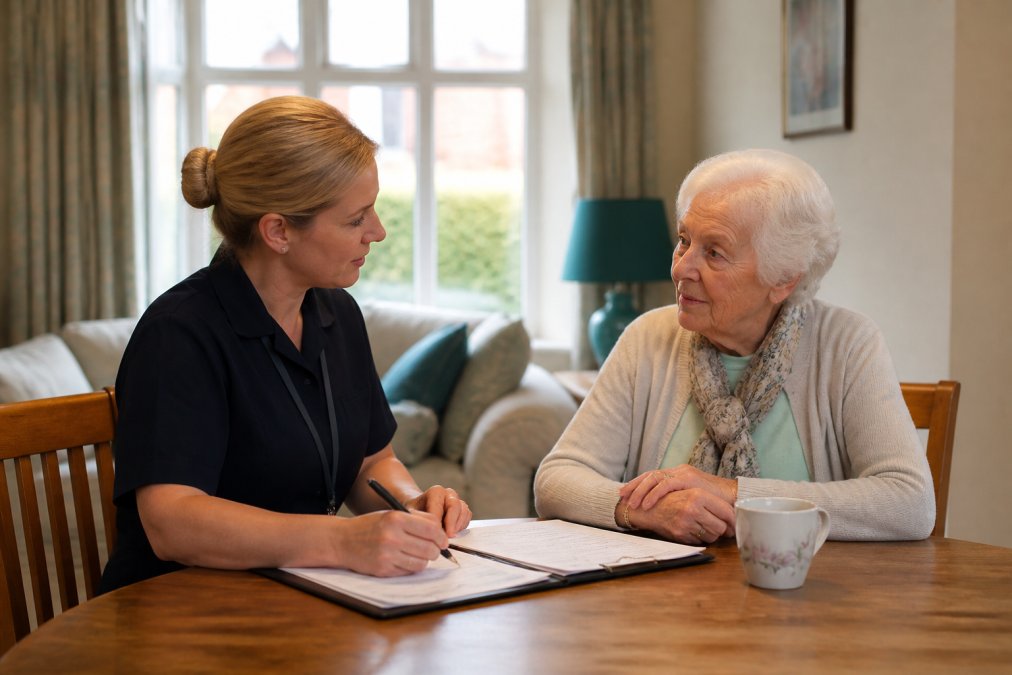
Booking a home care assessment with Bright Sky Care Ltd is straightforward. Contact the team to discuss your situation and confirm availability. The initial conversation helps identify what type of assessment is needed, whether it's evaluating care needs for the first time, reassessing after a hospital discharge, or exploring specialist support for a specific condition.
What Happens After Your Home Care Assessment
Once the assessment is complete and a care plan is in place, implementation begins. If you've chosen to work with Bright Sky Care Ltd, the team handles the logistics: recruiting suitable care staff and arranging an introduction visit before regular care starts.
Conclusion
A professional home care assessment is the foundation of good care decisions. It replaces assumptions with evidence, identifies both obvious and subtle needs, and produces a clear plan for moving forward.
Frequently Asked Questions
What is involved in a professional home care assessment?
A professional home care assessment evaluates your daily living needs, mobility, personal care requirements, and any specialist support needed. The assessor will discuss your health history, current challenges, and what matters most to you about staying independent at home. They'll review your home environment and identify any adjustments needed. This information forms the basis of your personalised care plan, ensuring the support you receive matches your specific circumstances.
How should I prepare for a home care needs assessment checklist?
Gather medical records, current medication lists, and details of any existing health conditions. Make a note of your daily routines and where you need most help. Tidy key areas of your home and ensure the assessor can access all rooms safely. Have family members or carers present if possible, as their input is valuable. Write down any concerns or questions beforehand so you don't forget them during the appointment.
Is a home care assessment free of charge?
Bright Sky Care Ltd offers a free, no-obligation home care assessment. This allows you to discuss your needs and explore care options without any cost or commitment. The assessment helps you understand what support would benefit you most and how personalised care can help you maintain independence at home. You can then make an informed decision about moving forward with care services.
What questions should I ask home care providers during the assessment?
Ask about staff training and qualifications, especially for specialist care like dementia support. Enquire how carers are matched to clients and whether you can meet them beforehand. Understand what happens if a carer is unavailable and how quickly replacements are arranged. Discuss flexibility of care hours, whether live-in options are available, and how care plans are reviewed and adjusted. Ask about safeguarding procedures and how concerns are handled. Finally, clarify the booking process and how to access support.